
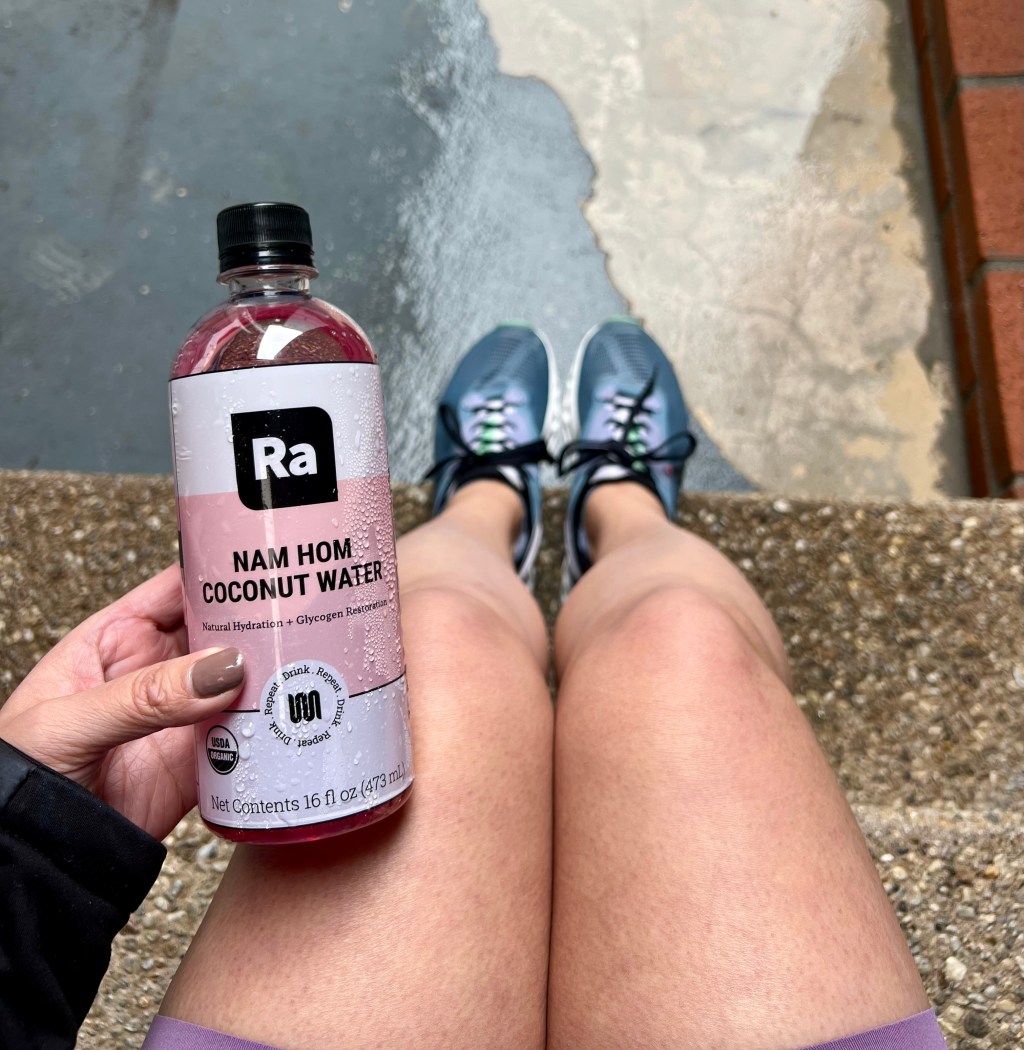
As you ramp up training, it’s important to make sure you’re eating well and enough to fuel all the workouts. I didn’t lose any weight in training! I decided I’d rather err on the side of overfueling, so I wouldn’t feel weak or faint. The few extra lbs made me feel sturdy and it was a great excuse to carb load (yes to pasta and cookies! 😀).
My runs during the week weren’t very long. Track night was speed work, around 4-7 miles max including warm up, and the Thursday night road run was 3 miles. Nutrition-wise, I mostly made sure to drink electrolytes on top of water. With all the sweating you do, it’s important to put back essential minerals. The Thursday group provided Ra coconut water and Electrolit (my favorite flavor is Berry Bliss), and on days when I was on my own I would add a Nuun tablet into my water.
For long runs, I made sure to prepare, practically and emotionally, ha. I would pack my hydration vest the night before with electrolyte water, eat a hearty carb-based breakfast, and the training group had water stations with Gu gels along the route. They also provided snacks at the end that included bananas, small protein bars, and pretzels. Especially after the really long runs (14-20 miles) I treated myself to In-And-Out or Shake Shack and ordered whatever I wanted.
The other good thing about training groups, especially on long runs, is it takes the thought and preparation out of training. The official LAM training group has a fee to join, but it was worth it to know the running route was decided already and there was going to be a water station waiting for us. I found that it’s nice to alternate between electrolyte water and just regular water. Sometimes you just want good old plain water!
For endurance workouts, your body needs energy to keep it going. Gels are essentially just carbohydrates, sugar and sodium packaged in a way so they’re easily digestible. I’ve heard some people mention they had GI tract issues (think diarrhea) on race day, which I was going to avoid at all costs, can you imagine?! Those may be due to existing personal health issues versus day-of digestion issues, but I wasn’t going to risk it. Control what you can!
My main fuel were Gu gels, which have a thick jelly-like consistency and it’s recommended to take with water, and Clif Blocks, which are like gummy candies. I mostly added in Clif Blocks to change up the texture and they were affordable. With the Clif Blocks though, I started to tire of them, they felt too sugary. The LA marathon coach had a great suggestion of rotating in baby food pouches. The baby food idea was genius! Especially as you get nutrition outside of just sugar and carbs. Let’s throw a veggie in there every now and then please! The recommendation is to take some type of nutrition every 30-45 minutes of endurance training.
One gel I tried and really liked are Maurtens, they taste better but are a little over double the price of a Gu gel, I didn’t splurge on these.
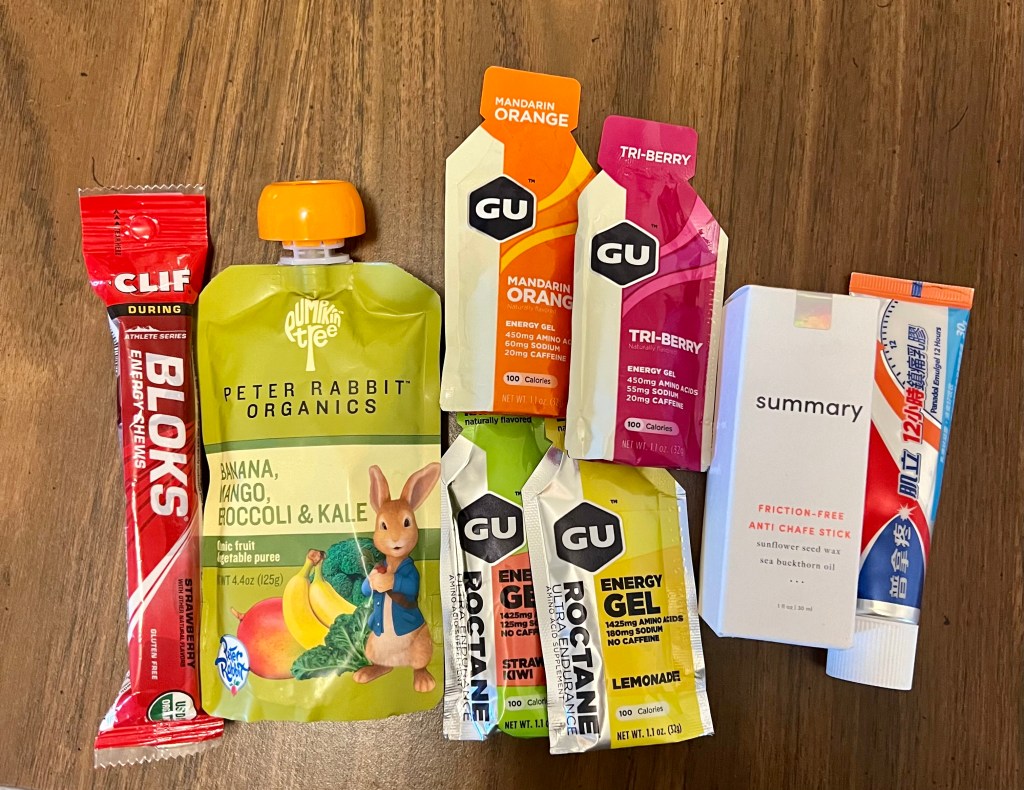
Clif Bloks, Baby Food, Gu with Caffeine, Anti-Chafe stick, and Asian version of Ben-Gay
ACTUAL FOOD
For actual food, on days that I was running, I allowed myself to indulge my vices. I usually avoid bagels at all costs since they are my kryptonite, but this was now the time to let loose. Oatmeal with protein powder and Trader Joe Taiwanese pancakes were also go-to’s before long run Saturday.
SUPPLEMENTS
Every year as I get older, I become more conscious of my diet and health i.e. trying to cut down on sugar, eat some type of fresh vegetable daily, taking vitamins. I don’t remember going out of my way in the day-to-day of training to modify my daily regimen. My supplement list already included Glucosamine, Chondroitin, MSM, CoQ10, NAC, and Hyaluronic Acid. I’m mostly religious about taking CoQ10 daily for the antioxidants and take the others on days I remember. All those above are good for joints and cellular function. Towards the tail end of training, when I was running 4x a week, I did add in Ashwagandha, which is said to help with athletic performance and recovery. It’s also an adaptogen and has a lot of other health benefits! I just felt as though I was putting my body through a lot and wanted to help it recover however I could; I think I would have felt the same even without it, but like to think it contributed. If you’re over 30 I’m sure you have a supplement list so just continue with those. When I would remember and for longer runs or after a tough strength workout, I would have an athletic recovery drink. FitAid has canned drinks and powders you can mix in, and towards the end of training I bought a big bag of Optimum Nutrition Whey that helps with muscle recovery that I’m still working through.
In the end, just make sure to listen to your body, drink a lot of water and electrolytes and eat healthy. During the actual marathon, after losing time in a long bathroom line at mile 6, I limited my water intake since I didn’t want to have to use the restroom again. It was hot and it was hard to gauge how much water I needed. By mile 22, I started to feel faint and light headed, and by that point, I thought I could make it to the end without stopping so I just went to town on liquids. Your body will tell you what it needs!
Main takeaways
- Drink electrolytes! There is so much going on in your body and coming out of it as you exercise, it’s important to put back essential minerals. You will feel it if not. I’m not the biggest fan of Gatorade since it’s so sweet. Look for options with less sugar. My go-to was Electrolit and Nuun
- Have a plan for nutrition on long runs. Err on the side of caution and bring snacks with you. I didn’t get a chance to try banana chips, since the Sat group usually had bananas at the end, but get creative! You don’t have to shell out for fancy running specific items, there are a lot of regular food choices such as baby food or dehydrated fruit bars/fruit leathers/protein bars
 Health | Fitness | Lifestyle