
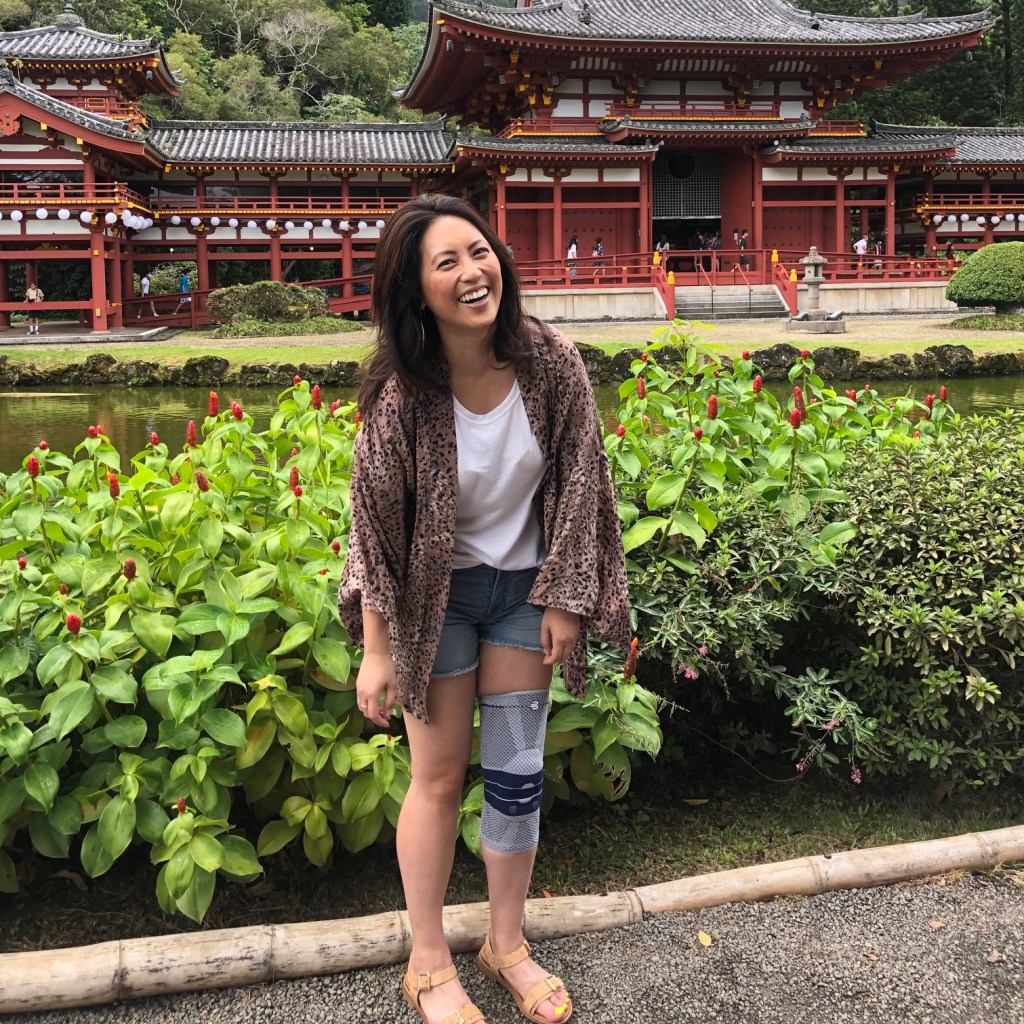
Happy Memorial Day 2022! I’m about 1 year and 2 months post-op and happy to say my knee is about 95% back to normal. Finally in the home stretch!
AAA and DISABILITY PLACARD
One small aspect of the surgery I was looking forward to was getting a temporary handicap placard. My Dr.’s office signed the application, but I was dreading going to the DMV for redemption. Covid made the process more confusing-was I supposed to submit via mail? Not sure. I received a tip that AAA offers some basic DMV services, who knew?! I went with my mom to the local AAA office in the first few weeks after surgery with no appointment. There was still a wait, but much shorter than if I had gone the other route. New life hack! The placard was mostly helpful for the PT clinic, which doesn’t have dedicated parking. In pre-hab I would park in the neighborhood and cross a main intersection, which is terrifying when you have a recently operated leg. The placard allowed me to park at meters without paying, and on streets that required residential permits.
MID-RECOVERY
Once you’re up and walking without crutches, I would say comes the harder, more prolonged aspect of physical therapy. We focused on strengthening, balance, and activating all the muscles I hadn’t been using the past 2-3 months. Even though I was able to walk on my own, it wasn’t easy. Going downhill took a lot of energy as my quad was still very weak, and I didn’t feel safe in large crowds, where the probability of getting jostled or tripping was higher.
Once I outgrew the Ace wrap (the incisions had closed), my physical therapist recommended a GenuTrain knee brace, and I bought two, one in a smaller size for my weak quad, and one larger for when my leg would return back to normal. Watching the Olympics last summer, I saw that the brace is pretty legit as many members of the Chinese women’s volleyball team were sporting the GenuTrain knee or arm brace. I guess I’m in good company!
Sidebar: Cover photo is me on vacation in Hawaii 4 months post-op. I definitely didn’t feel safe without the brace, came back with a tan line on the leg, oh well. Not sure what I’m doing in the picture, but it was the best photo…I’m the worst model…
Even though I was going to physical therapy 2x a week, it wasn’t until I started incorporating Pilates that I saw a huge shift in my leg strength, which just goes to show that you really have to be diligent about exercising and strengthening on your own. Additionally, it’s important to build up stamina and endurance, so I made a point to cycle or use the elliptical at the gym, and started swimming again once my quad was strong enough for kicking. I hate running, but it’s a huge milestone in ACL rehab and once I was cleared to run on my own I also made a point to run at the track and at the gym.
Especially in mid-recovery, my knee would get quite stiff and tight. They massaged it in PT and I was given home exercises and stretches for stiffness as well. I did some research on my own and decided to invest in nice compression socks. These socks help increase circulation, reduce soreness and inflammation and much more. I bought mine from Comrad, but there are many options out there at different price points. I fell asleep on the couch with them on one night, and when I awoke I could feel the blood in my legs pumping and my knee felt less stiff when I got up.
SOCIAL MEDIA and MASSAGING YOUR SCARS
I have an ambivalent relationship with social media. You know not everything that’s on there is real and people stage the best parts to post, but I do love it as a tool to stay in touch with friends you don’t see often. ADDITIONALLY, there is such a huge support team that I’ve discovered on Instagram, with The ACL Club, as well as accounts from physical therapy clinics, or individual therapists.
A few of my favorites:
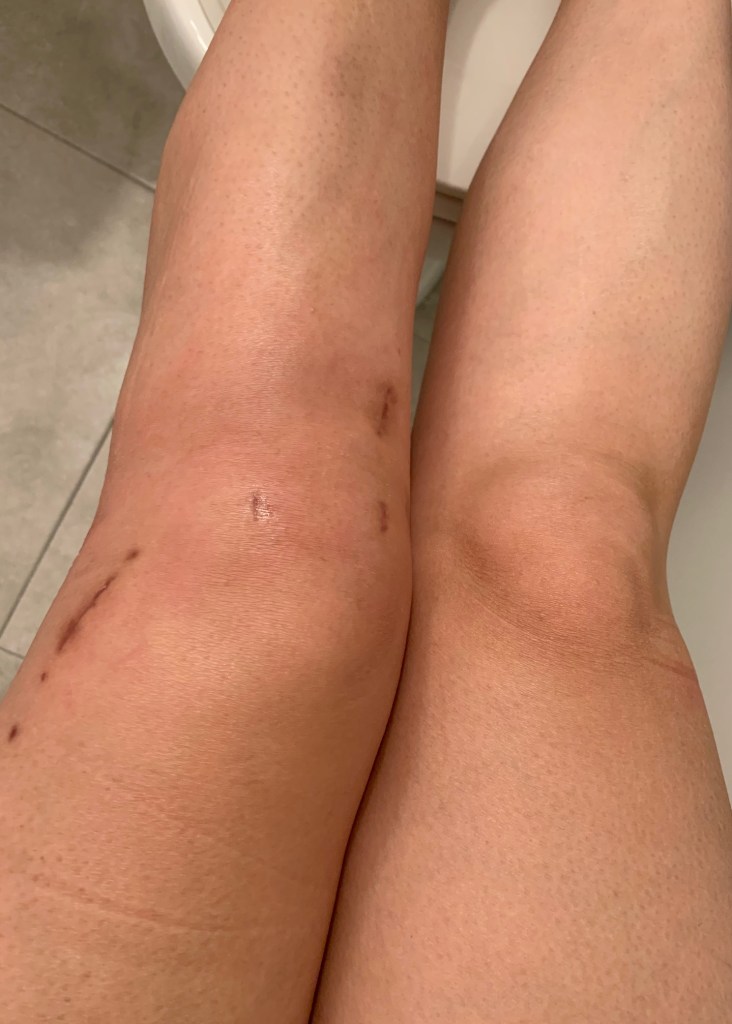
On Instagram, I follow Andri Ragettli who is a Swiss professional freestyle skier. Unfortunately, he tore his PCL back in March 2021 as part of the World Championships, and he documents the injury and process here. In his post-op posts, it looked like he had no scars on his knee. Mine are just now starting to lighten, despite being pretty good about keeping them out of the sun, applying sunscreen and Mederma. I DM’d him asking how he had no scars and he actually replied! I love IG! I’m sure he was also really bored in recovery, but I’ll take what I can get! He had great advice, which is to massage your scars, it also helps to break up the scar tissue and stimulate the skin around the incisions.
Technology for the Win x3!

WORK YOUR ASS – LITERALLY
Y’all, so a lot of my exercises in PT are working the glutes, and what I’ve learned is that YOUR BUTT IS SO IMPORTANT. How is no one talking about this?! Or clearly I’m just the last to know. It’s not just for looks but for function! I was never one of those people who cared much about that body part-in HIIT or CrossFit classes I was a get-in and get-out type of person–give me a full body workout so I can go home and drink wine and eat popcorn. Well, according to Shape Magazine: “Focusing on the glutes reinforces the hip region, but also the quads and your ACL and VMO muscle, which surrounds and support the knees,” says Lewis. “A strong butt means strong knees.” Without strong glute muscles, you won’t be able to safely perform those movements with your knees in the correct position, putting you at risk for injury.
You’re telling me I can look good from behind and avoid injury?! Sold! There are even more reasons outlined in the article here. Definitely going to keep this up even when I’m out of PT 😊
PHYSICAL AND MENTAL THERAPY
I’m now at the tail end of physical therapy, where we’re focusing on functional activities. I’m practicing jumping, shuffling, cutting, things I would do out on the slopes or in sports. These exercises are just as hard, as we’re isolating muscles and making sure form and mechanics are correct. It’s also working on coordination–I think I finally understand what goes on at NFL practice?! I’m down to 1x a week visits due to insurance limits and I supplement with boot camp and the gym the rest of the week. I should be cleared in the next month or two and will have one last Dr. visit.
While social media has been a helpful resource as I previously mentioned, I found myself comparing my recovery to others, which hasn’t been helpful. I recognize that at least and make a concerted effort to focus on my recovery only: how I’m feeling each day, how I feel at each workout session. I also recently started meeting with a sports psychologist as I do have low grade anxiety about returning to sport. I love skiing and snowboarding. I want to be able to, at minimum, dominate the hard blue runs, but the thought of getting back out on a snowy hill is daunting and scary. It makes me feel better that professional athletes also have the same struggles as outlined by Jamal Murray of the Denver Nuggets, who tore his ACL two months after I did and hasn’t returned to playing yet, though he’s been medically cleared. It goes to show that mental recovery and health is just as important, so make sure to check in with yourself there as well! It’s been helpful to have someone to talk through the emotions and bounce thoughts off of. I originally had a timeline to go back, but decided I’m going to have a more fluid approach and not force anything.
PARTING WORDS
If you’re reading this, thank you for staying through to the end! But it also means you most likely tore your ACL, so I’m sorry that happened (I empathize with you!), but I do believe that everything happens for a reason, even though it may not be evident in the moment. For those who may be younger and your surgeon is recommending an allograft, I think the process is very similar but there might be more pain. A friend of mine used her own hamstring tissue and she mentioned she had a pain IV at home the first two weeks or so post-op.
I hope that my writing about my experience helps quell any fears and anxiety about your injury, the surgery and the recovery. It is a process but you’ll get through it! If you’re a friend or caregiver, I hope it helps you understand what those going through this experience, both physically and emotionally, and helps you better support the patient along the way.
God bless!
 Health | Fitness | Lifestyle